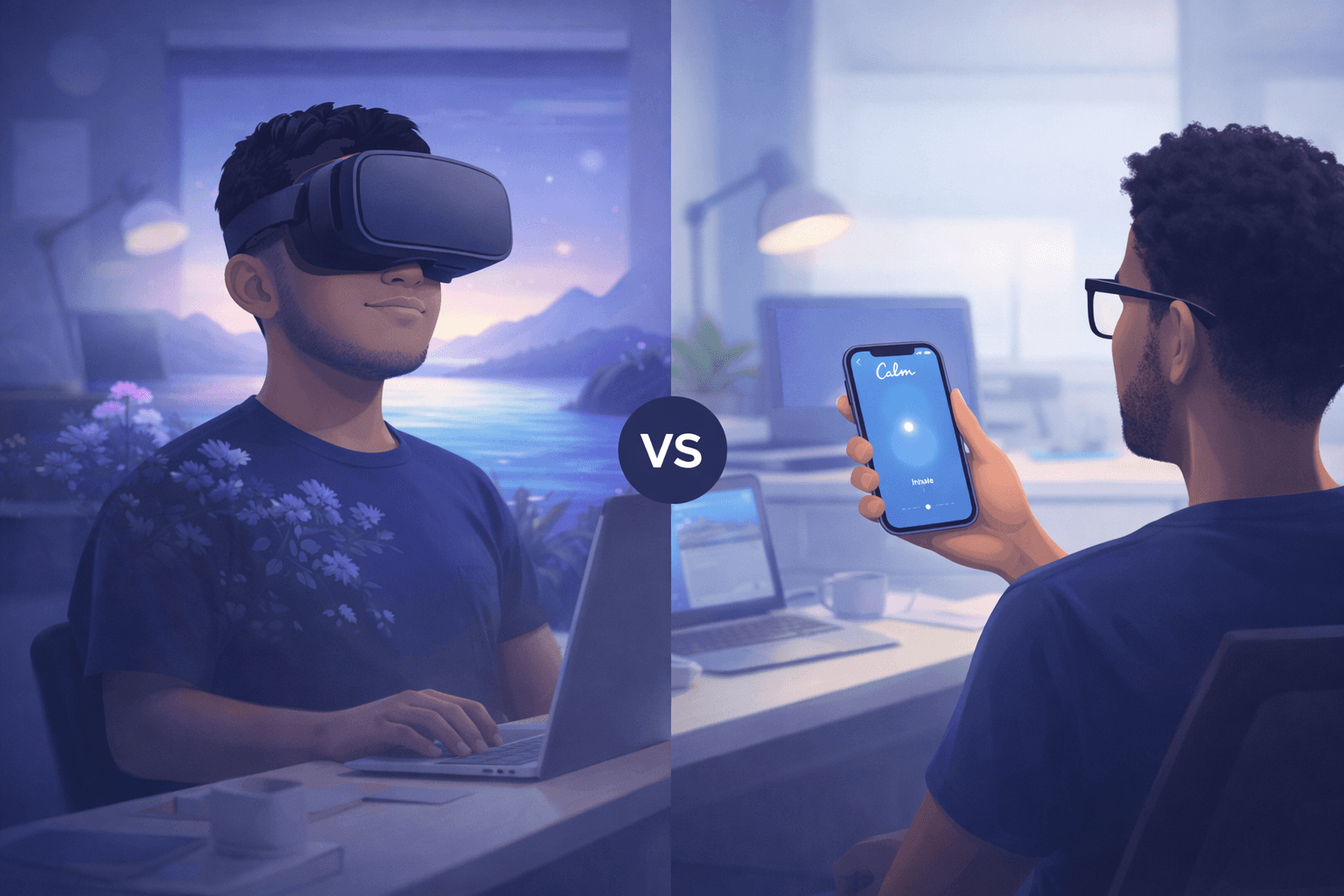
Participants completed:
VR breathing session (3-5 min)
Calm breathing session (3-5 min)
Post-session Interview and questionnaire
Setting: Desk-based workspace simulation.
Measured Dimensions:
Emotional Immersion
Focus
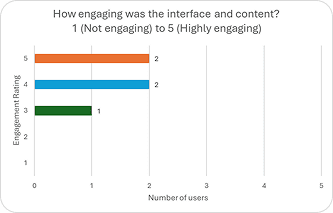
Engagement
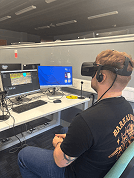
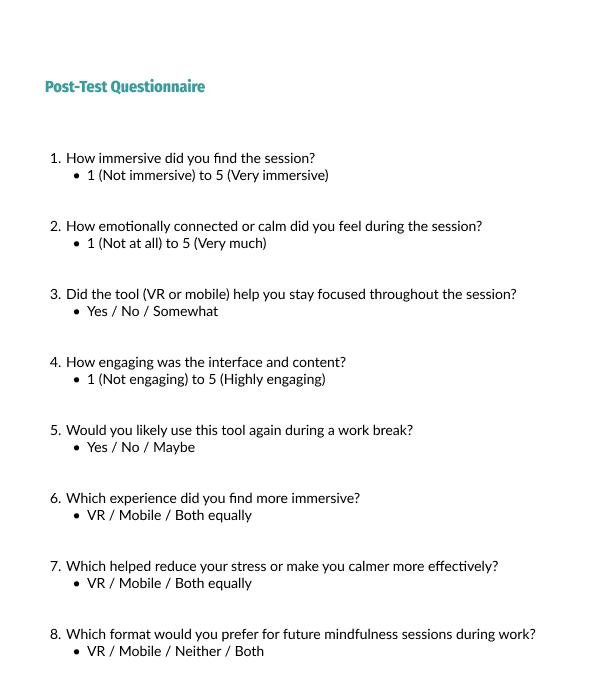
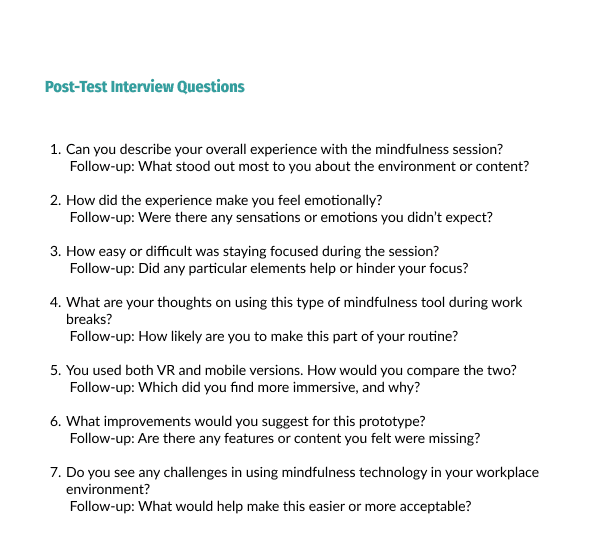
Participant (Mobile App)———Survey Question————Questionnaire
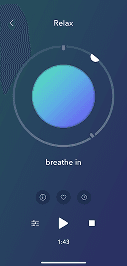
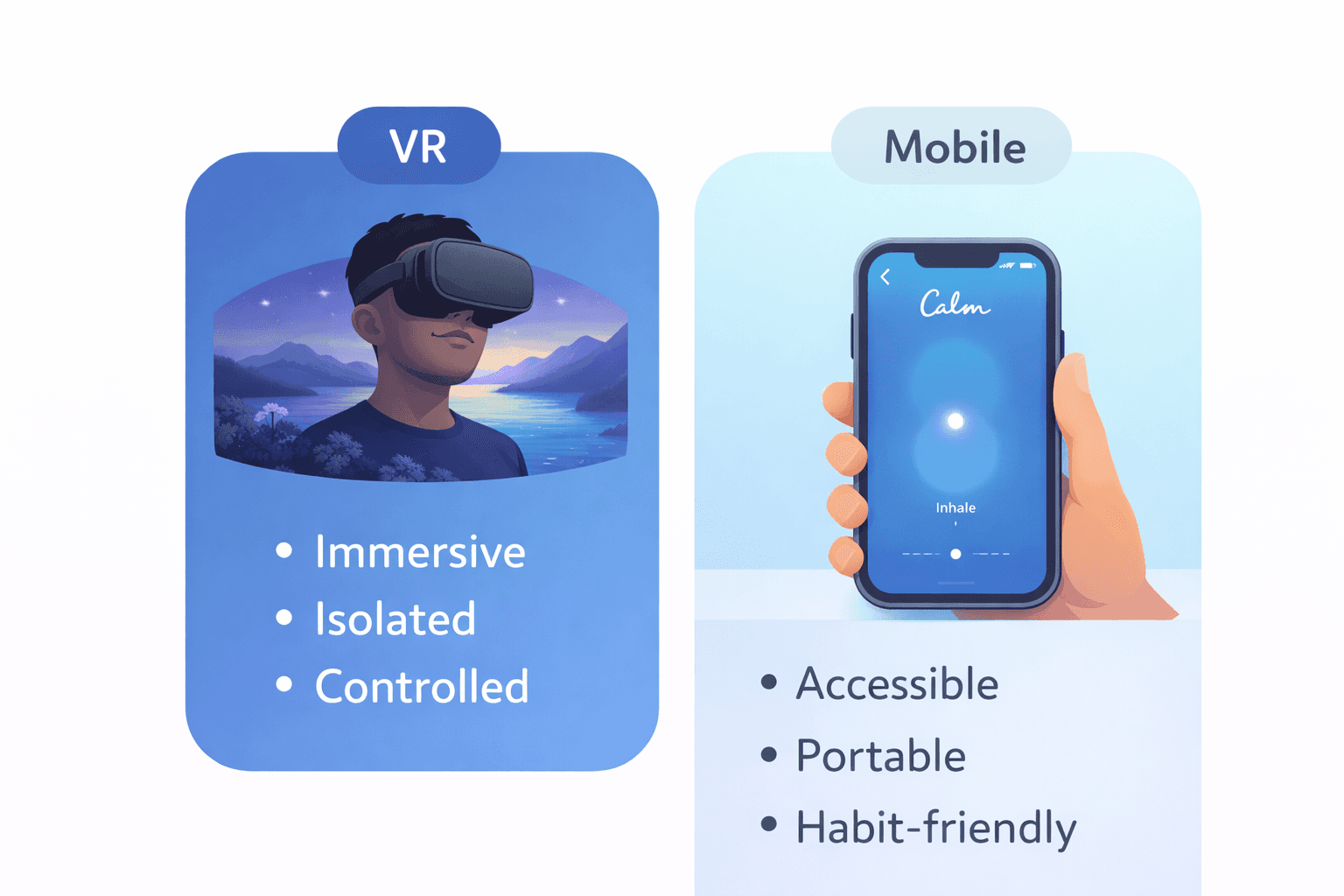
VR Experience
Immersive environment
Visual breathing cues
Environmental isolation
No external interruptions
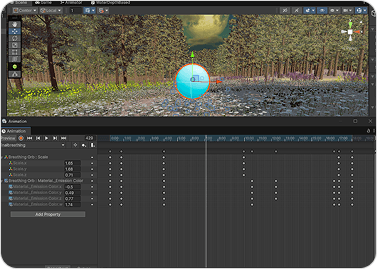

The design strategy focused on reducing cognitive overload while reinforcing routine stability. The system behaves as a quiet assistant — intervening only when deviation from normal behavior patterns is detected.
1️⃣ Emotional Immersion
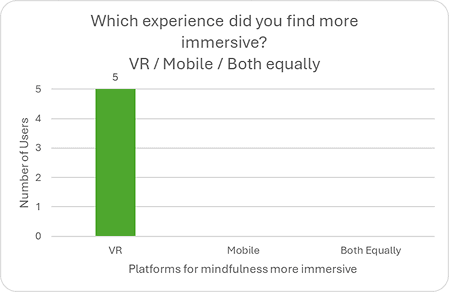
VR significantly increased perceived immersion and environmental detachment.
2️⃣ Focus
VR reduced desk-based distractions more effectively.
3️⃣ Engagement
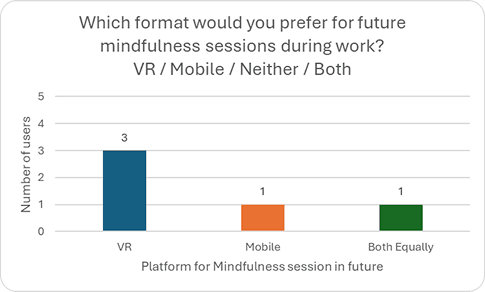
VR felt impactful but required setup effort.
Mobile felt easier to repeat consistently.
Immersion enhances depth.
Accessibility drives sustainability.
VR is powerful for episodic reset.
Mobile is better for habitual integration.
This suggests platform strategy matters more than raw immersion.
DESIGN IMPLICATIONS
For wellness product teams:
• Use VR for deep, intentional reset sessions
• Use mobile for daily micro-practices
• Consider hybrid ecosystems
• Reduce VR setup friction
LIMITATIONS
• Small academic sample
Self-reported data
Short exposure duration
Possible novelty bias in VRUX research design