UX Case Study . 12 min read

UX Case Study . 12 min read

GlasGroov

GlasGroov

GlasGroov

Find your rhythm navigating Glasgows culture and student life

Find your rhythm navigating Glasgows culture and student life

Find your rhythm navigating Glasgows culture and student life

Mobile App for International Students

Mobile App for International Students

Mobile App for International Students

Role

UX Designer

Role

UX Designer

Tools

Figma, Balsamiq, Canva

Tools

Figma, Balsamiq, Canva

Duration

8 weeks

Duration

8 weeks

Platform

Mobile App

Platform

Mobile App

The Problem

International students aged 18–24 arriving in Glasgow face fragmented digital experiences. They use separate platforms for accommodation, events, transport, discounts, and job searches — increasing stress and reducing their ability to feel socially connected.


Many report:

  • Difficulty discovering affordable activities

  • Financial anxiety

  • Social isolation

  • Information overload

The Goal

Design a centralized, personalized mobile experience that helps students:

  • Discover events and deals

  • Explore Glasgow

  • Connect with peers

  • Reduce decision fatigue

detail-image
detail-image
Research & Insights

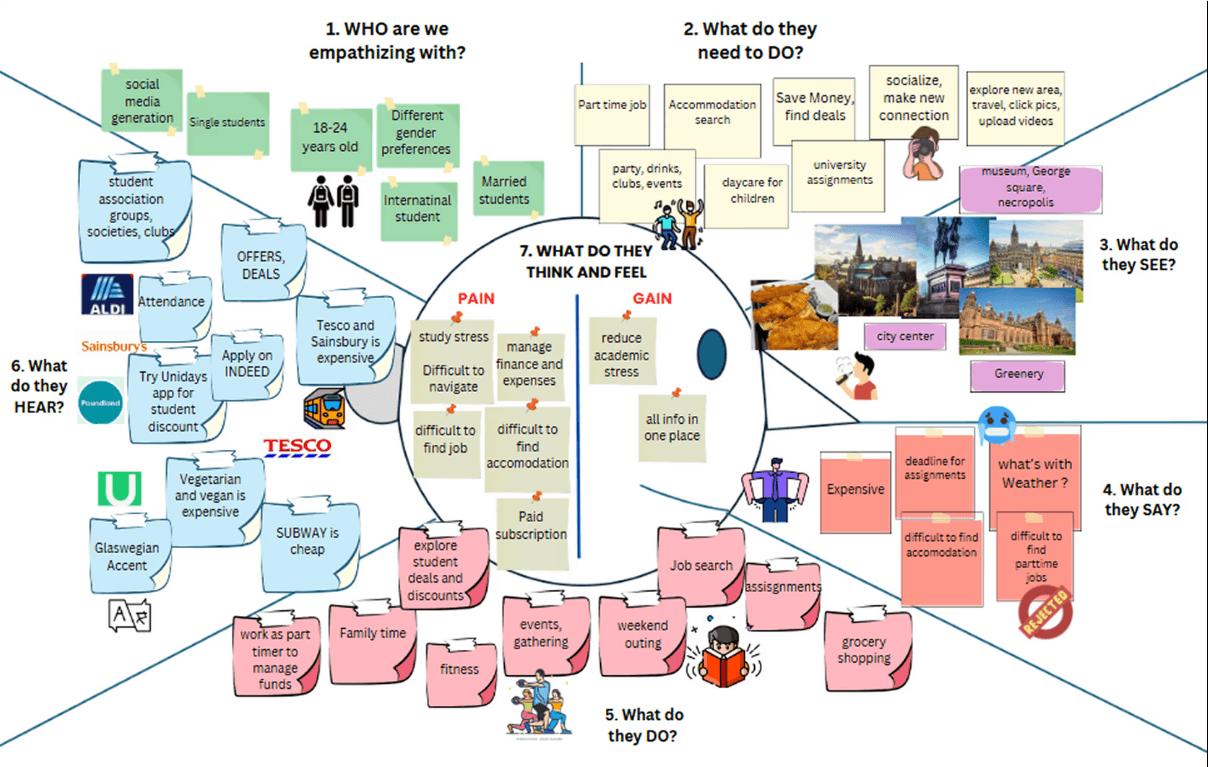
Through competitor analysis, empathy mapping, and interviews:


Key Insights

  1. Students rely heavily on smartphones (10–13 hours/day average use).

  2. Financial constraints influence most decisions.

  3. Navigation & transport confusion reduces exploration.

  4. Social belonging is a major emotional driver.
Opportunity

How might we design a single platform that reduces friction while encouraging cultural engagement and social connection?

How might we design a single platform that reduces friction while encouraging cultural engagement and social connection?

MVP Strategy

To avoid feature overload, I focused on 4 core features:


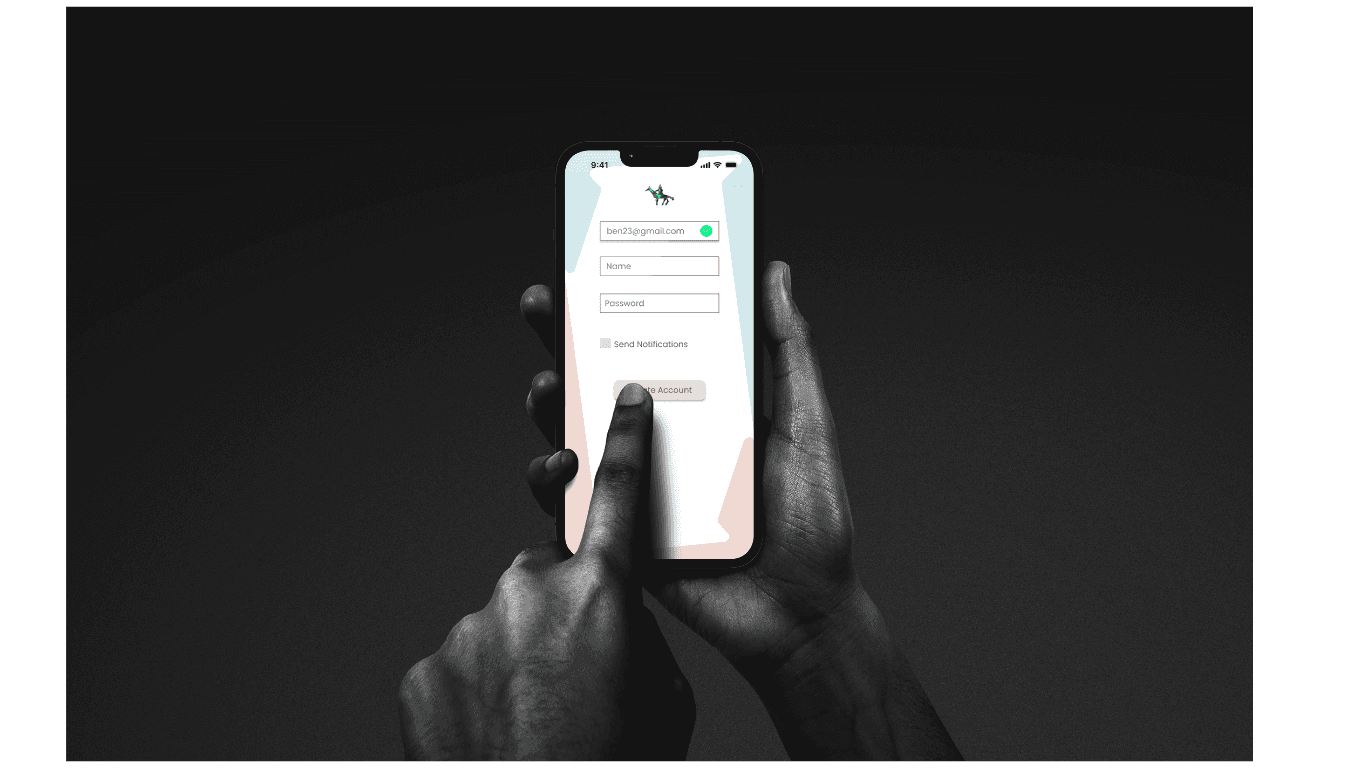
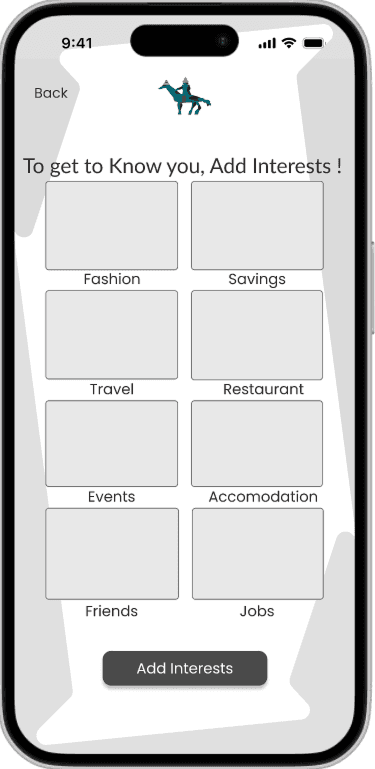
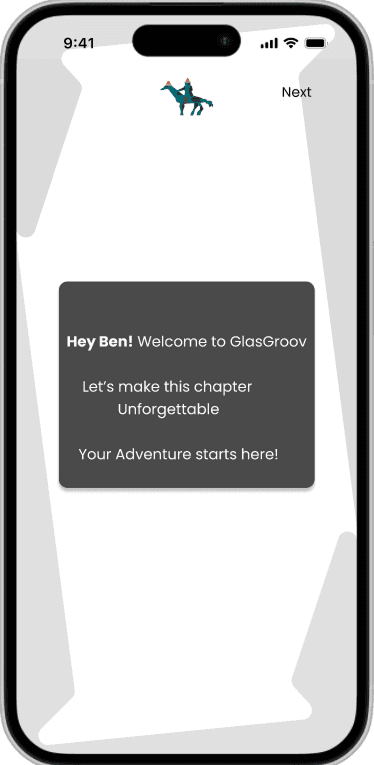
  1. Personalized onboarding

  2. Explore (Map + Attractions + Events)

  3. Student Deals & Discounts

  4. Friend Finder

Jobs and accommodation were identified as future expansion features

Key Design Decisions

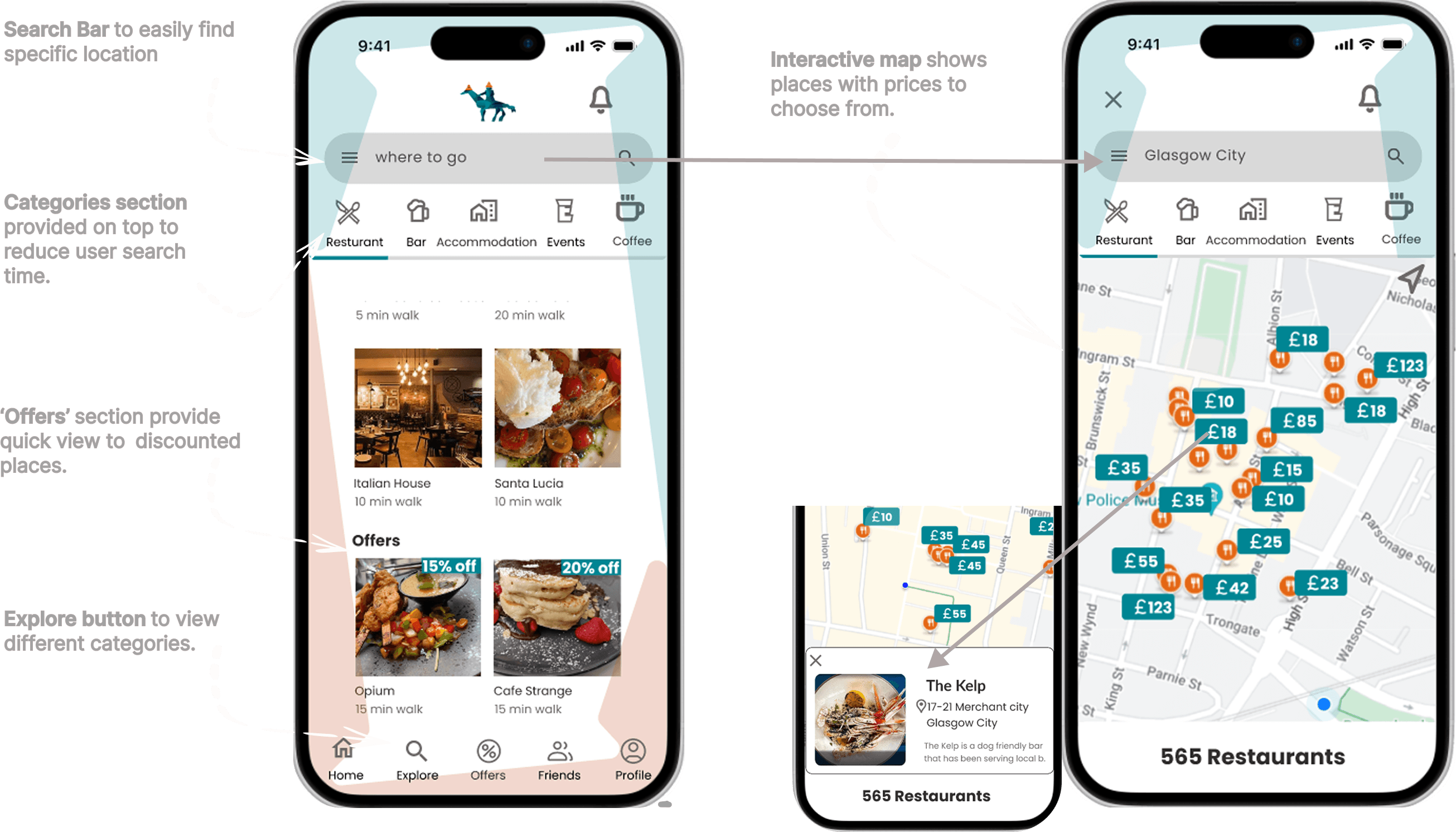
Personalized Home

  • Daily challenge to increase retention

  • Weather integrated in hero section

  • Top attractions based on reviews

  • Quick-access categories.

Explore with Interactive Map

  • Filter by category

  • Price visible on map markers

  • Walking distance displayed

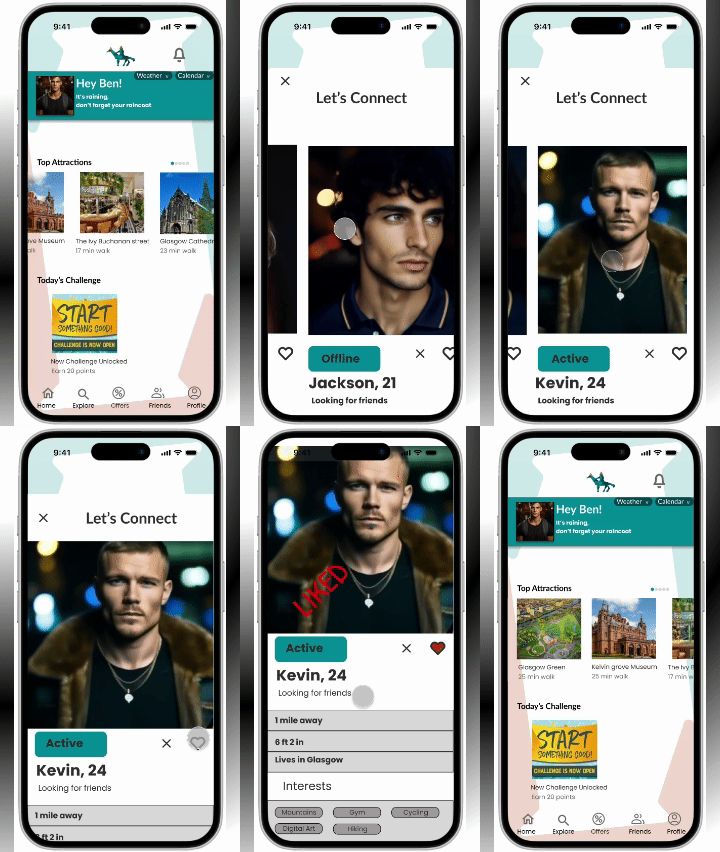
Friend Finder

  • Group chat integration

  • Match by interests

  • Encourages inclusion

Offers Section

  • Copy code feature

  • Clear discount cards

  • Redemption clarity

Accessibility

  • Zoom slider

  • Contrast mode

  • Clear typography hierarchy

  • Consistent icon system

LO- FI WIREFRAMES

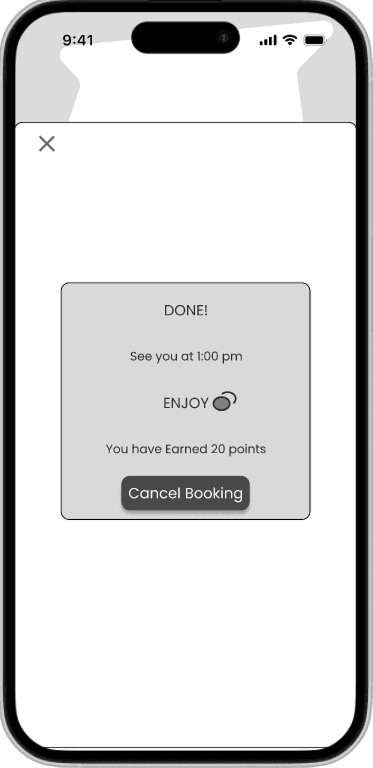
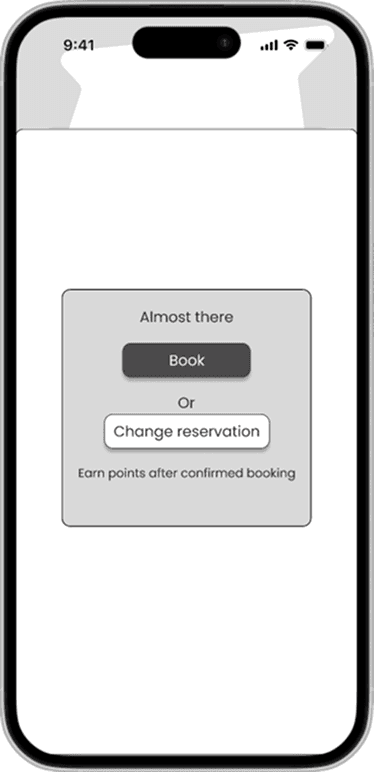
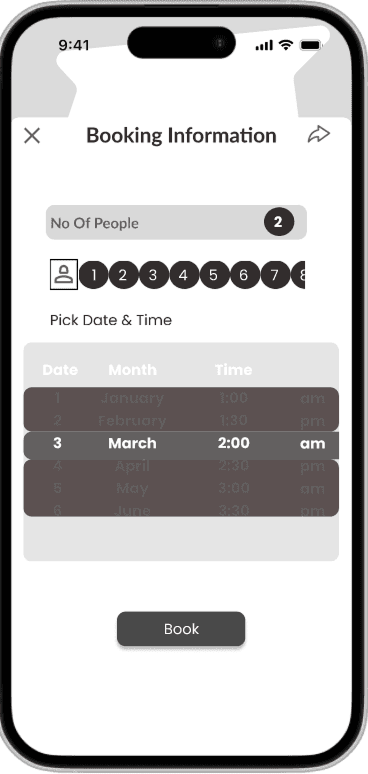
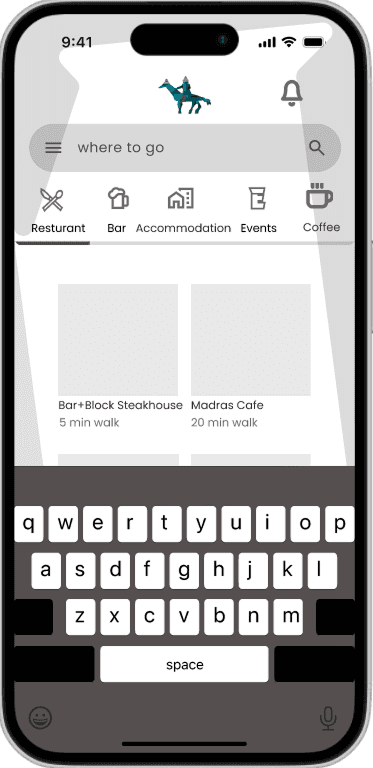
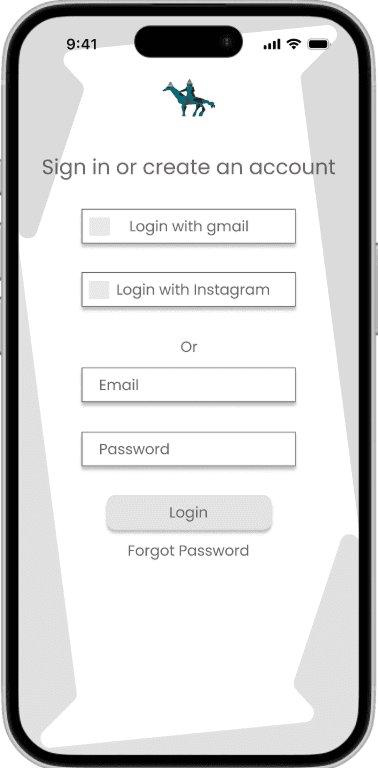
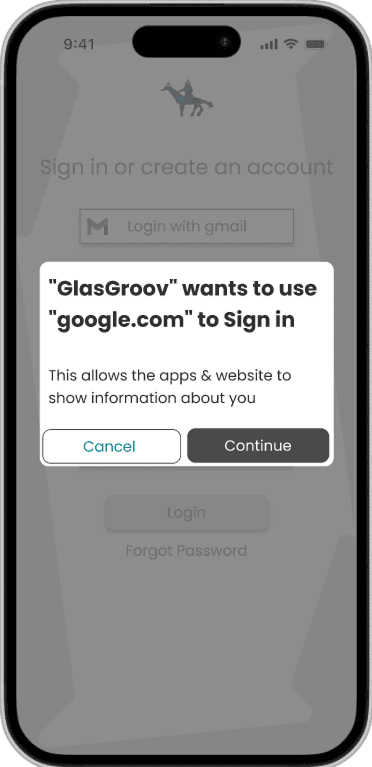
To quickly validate ideas, I created low-fidelity wireframes that mapped out the core flows — event booking, restaurant booking, friend search, and gamification features. Keeping the designs simple allowed me to test navigation and information hierarchy early without being distracted by visuals. Feedback from students at this stage helped me spot pain points, refine the bottom navigation, and prioritize the features that mattered most before moving into detailed design.
HI- FI PROTOTYPE
Exploring and Refining Solutions
detail-image
detail-image
Event Booking
Event Booking
Discover and join cultural life effortlessly

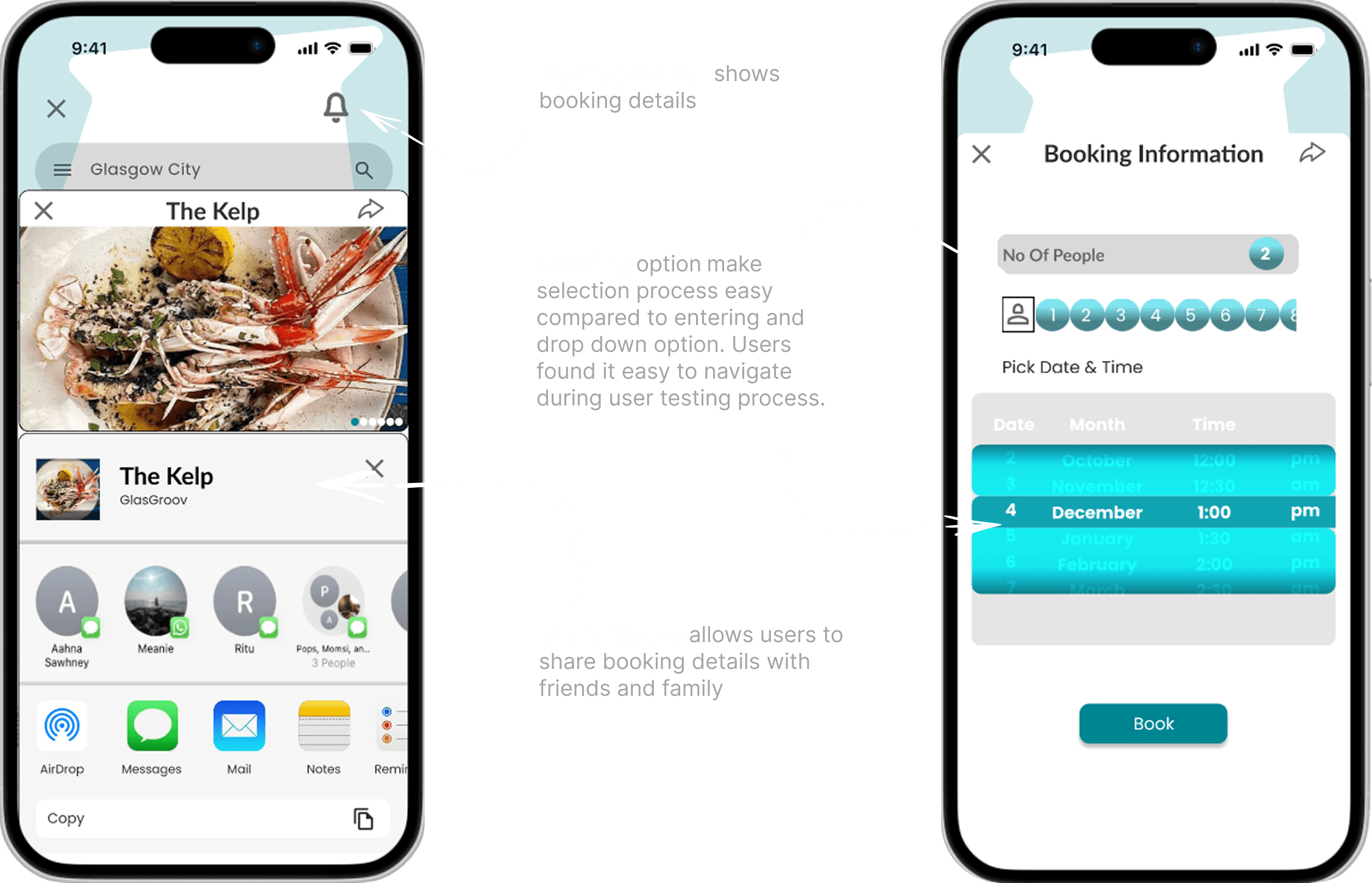
To streamline participation, I created an event booking flow with an interactive map that shows venues and directions at a glance. Students can RSVP directly in the app, pay for tickets seamlessly through in-app payments, and receive reminders — eliminating the need to jump between multiple platforms.


UX Strategy:

  • Clarity & Trust: Transparent event details and payments build confidence.

  • Commitment & Consistency: Easy RSVP and reminders boost attendance.

  • Cultural Integration: Connecting students with local events fosters a stronger sense of belonging.

To streamline participation, I created an event booking flow with an interactive map that shows venues and directions at a glance. Students can RSVP directly in the app, pay for tickets seamlessly through in-app payments, and receive reminders — eliminating the need to jump between multiple platforms.


UX Strategy:

  • Clarity & Trust: Transparent event details and payments build confidence.

  • Commitment & Consistency: Easy RSVP and reminders boost attendance.

  • Cultural Integration: Connecting students with local events fosters a stronger sense of belonging.

Friends Search & Connection
Turning strangers into a community

To address feelings of isolation, I added a friend search and connection feature. Students can look up peers with shared interests, view mutual events, and connect before or after attending activities. This bridges the gap between event discovery and meaningful social connection.


UX Strategy:

  • Social Integration: Encourages real-world friendships.

  • Belongingness: Directly addresses student isolation uncovered in research.
detail-image
detail-image
User Testing & Iteration

Tested with 3 users


Tested with 3 users


Findings:

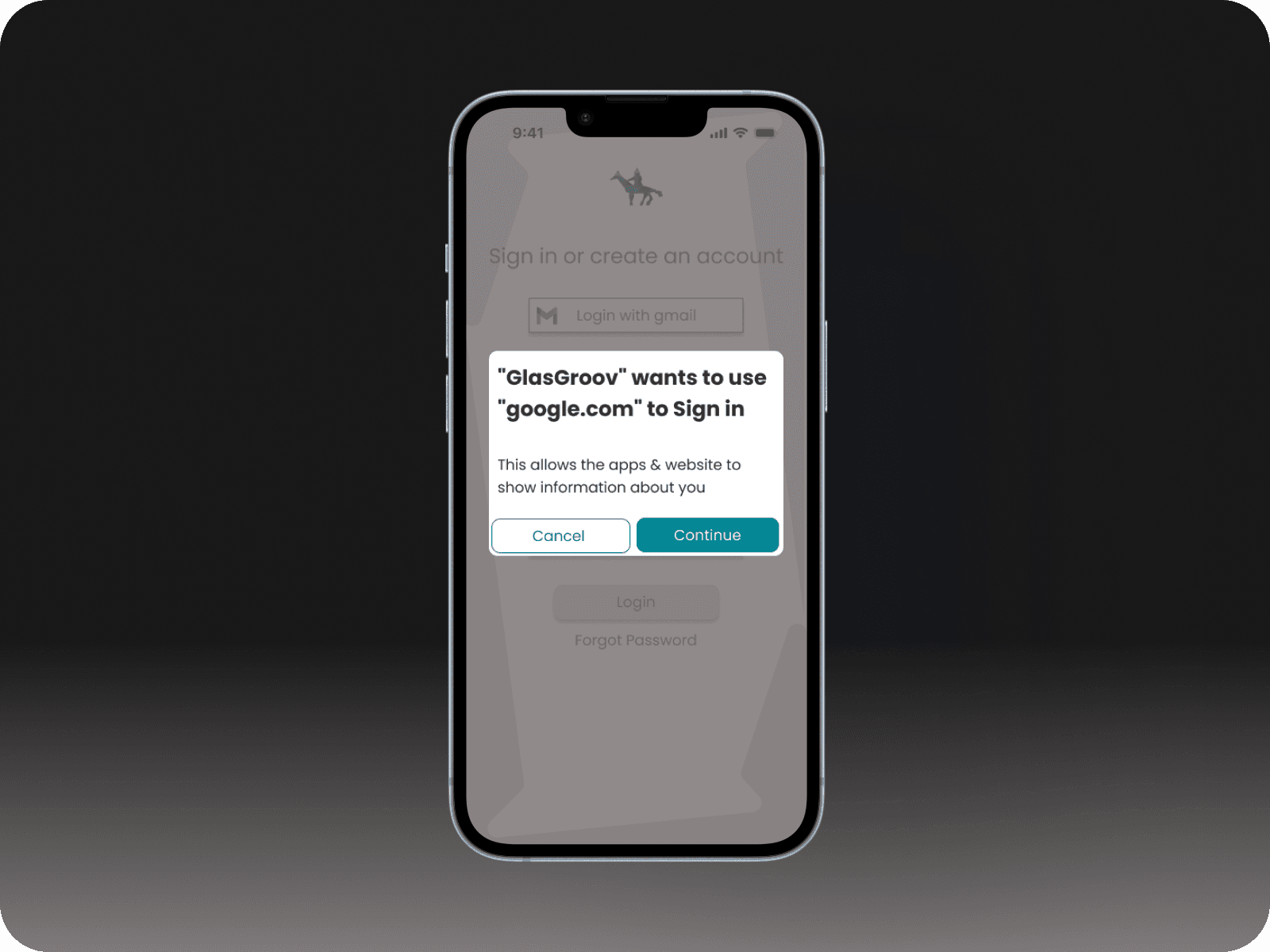
  • Login options were confusing → simplified.

  • Gradient booking page reduced readability → adjusted.

  • Mixed icon styles → standardized.

  • Navigation repositioned for better thumb reach.

After iteration:

  • Login options were confusing → simplified.

  • Gradient booking page reduced readability → adjusted.

  • Mixed icon styles → standardized.

  • Navigation repositioned for better thumb reach.

Impact (Academic Metrics)


  • Increased clarity in booking flow

  • Reduced navigation confusion

  • Improved accessibility compliance

  • Positive qualitative feedback from testers

Learning & Reflection
This project taught me:


  • Designing within cognitive load limits

  • The importance of feature prioritization

  • Iterative testing improves clarity significantly

  • Gamification must align with real user motivation

  • Designing within cognitive load limits

  • The importance of feature prioritization

  • Iterative testing improves clarity significantly

  • Gamification must align with real user motivation

If continued, I would:


  • Conduct larger usability testing sample

  • Track retention impact of daily challenges

  • Explore sustainable monetization model

THANK YOU
THANK YOU
THANK YOU
End of page, not the end of story.

Every journey starts somewhere. This one? It starts with Somi.

Let’s design, build, or just share a laugh over

Or

Drop a message on Social media

© Copyright 2025.

Crafted with imagination🧠, fueled by Caffeine ☕✨, shaped by deadlines, and saved by “Ctrl + Z.”

Thanks for stopping by — you’re officially part of the experiment now. ⚡

Crafted with imagination🧠, fueled by Caffeine ☕✨, shaped by deadlines, and saved by “Ctrl + Z.”

Thanks for stopping by — you’re officially part of the experiment now. ⚡

Created by

in

Create a free website with Framer, the website builder loved by startups, designers and agencies.