



Role
UX/UI Designer,
Researcher
OVERVIEW
This conceptual project investigates how AI-powered Augmented Reality (AR) glasses could improve daily living for dementia patients. By combining emotion detection with contextual overlays, the design explores how wearable technology might reduce stress, support memory, and empower caregivers.
Grounded in literature review and healthcare research, the project reimagines assistive technology through a design lens — proposing a system that feels empathetic, simple, and future-ready.
WHAT IS AURA APP?
Aura is a conceptual caregiving ecosystem designed to support people with dementia and their caregivers through empathy-driven technology.
The system consists of two connected parts — smart AR glasses for patients and the Aura mobile app for caregivers. Together, they aim to detect emotional stress, guide daily activities, and foster independence without compromising safety.
Rooted in the idea that technology should feel like care — not control — Aura reimagines assistive tools as calm, intelligent companions that respond to emotion, not just action.
WHAT IS SMART AR GLASS?
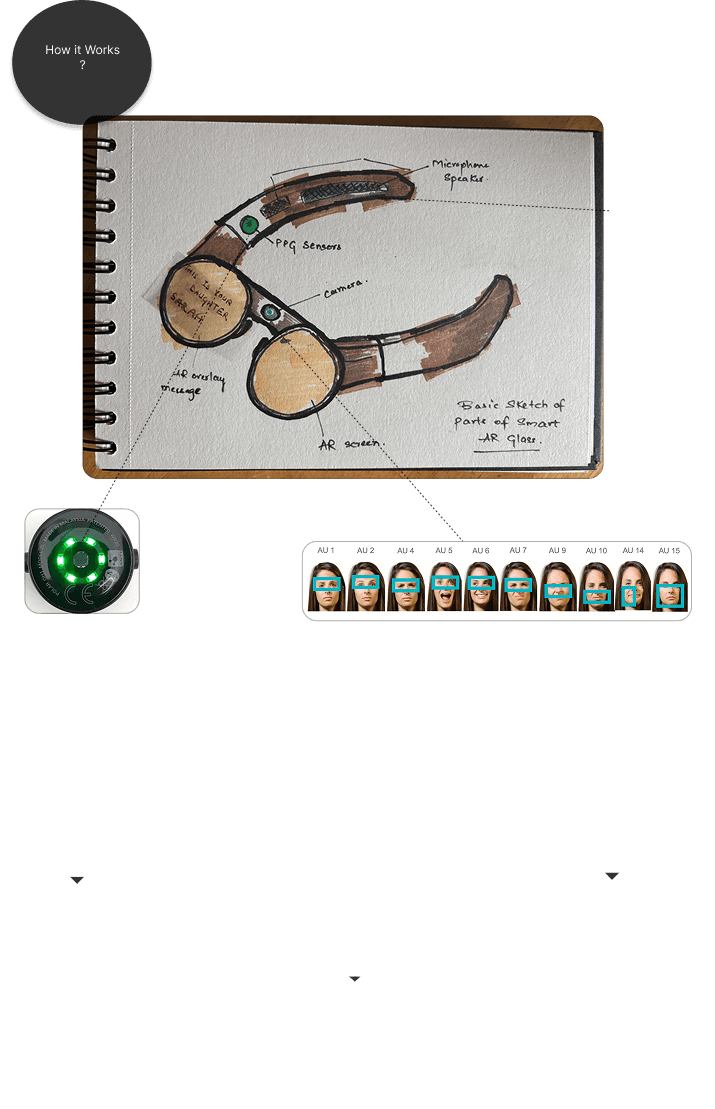
The Smart Glass is a wearable AR prototype designed to gently assist dementia patients throughout their daily routines. Using emotion recognition, gaze tracking, and contextual prompts, it can detect moments of stress or confusion and display subtle visual or verbal guidance through the lenses.
From medication reminders to navigation cues and soothing affirmations, the smart glass acts as a silent guide — helping users regain confidence and autonomy in familiar environments.
When paired with the Aura caregiver app, it forms a closed loop of real-time empathy and support, ensuring caregivers are informed, while patients feel safe, calm, and understood.
The Challenge
Caring for individuals with dementia is as emotionally demanding as it is logistically complex. Patients often face memory lapses, disorientation, and heightened anxiety, while caregivers struggle to offer continuous support without intruding on independence.
Despite advancements in healthcare technology, most assistive tools focus on reminders or monitoring — not emotional well-being. They alert, instruct, or record, but rarely empathize. Through literature research and analysis of dementia care patterns, I identified a key gap:
There are few tools that recognize emotional distress and respond with calm, human-like reassurance.
The challenge, therefore, was to design a connected system that senses emotion, reduces cognitive stress, and supports autonomy — bridging the space between care, comfort, and technology.
My Approach
My process focused on synthesizing secondary research into actionable design insights.
I followed the Diamond framework, adapting it to blend scientific evidence, human-centered thinking, and creative exploration:
Discover: Literature review on dementia behavior, emotional triggers, and affective computing.
Define: Identification of opportunity areas where technology can enhance safety and reduce anxiety.
Develop: Conceptual ideation of the Aura ecosystem — smart glasses for patients and app for caregivers.
Deliver: Creation of high-fidelity Figma prototypes visualizing the ecosystem and interaction flow.
This approach kept the project grounded in empathy, even without direct user testing.
DISCOVER PHASE
Understanding Care Beyond Technology
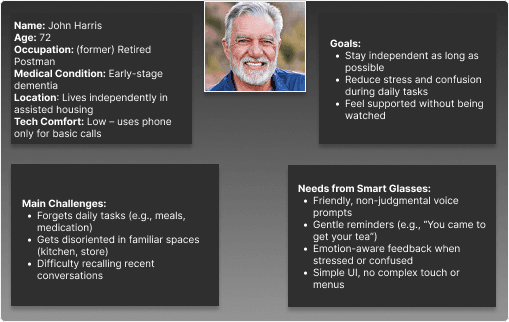
Since this was a conceptual academic project, I began by grounding my process in literature research, secondary data, and case analysis — exploring how dementia affects both patients’ emotional stability and caregivers’ mental load.
My goal in this stage was simple yet profound:
To understand not just what people with dementia forget — but what they feel when they forget.
I reviewed medical and behavioral studies on dementia, focusing on:
Common emotional states like confusion, anxiety, and agitation.
How environmental cues (sound, light, routine changes) can trigger distress.
The critical role of caregiver empathy and non-verbal reassurance in restoring calm.
Alongside, I analyzed existing assistive technologies such as Google Glass Enterprise, AR health tools, and emotion-sensing wearables to identify gaps. Most focused on task completion (navigation, reminders) rather than emotional intelligence.
This research highlighted a recurring theme:
While technology supports safety, it rarely supports empathy.
The insight became the seed for Aura — a connected AR ecosystem that detects emotional distress, gently guides users, and communicates care in real time.
DEFINE PHASE
By mapping dementia care journeys and analyzing research papers on emotion recognition, I pinpointed moments where support tends to break down — confusion during routine tasks, stress in crowded areas, or forgetting steps in daily activities.
Rather than defining “problems to solve,” I reframed them as opportunities to comfort:
How might design restore confidence in moments of confusion?
How might subtle visual or voice cues ease stress before it escalates?
How might caregivers remain informed without feeling intrusive?
These insights defined the foundation for Aura: a system that detects emotional tension and responds with reassurance.
EXISTING PRODUCTS
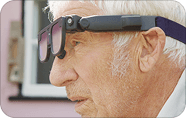
Crosssense AR smart glass

WHAT'S NEW ?
HOW IT WORKS
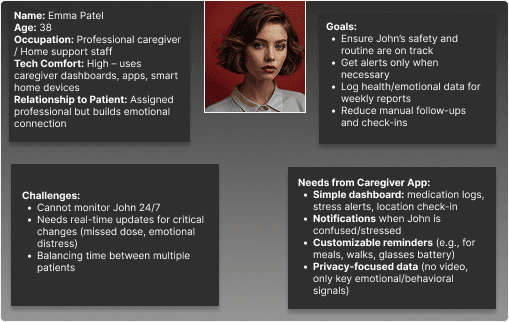
PERSONAS
PERSONAS
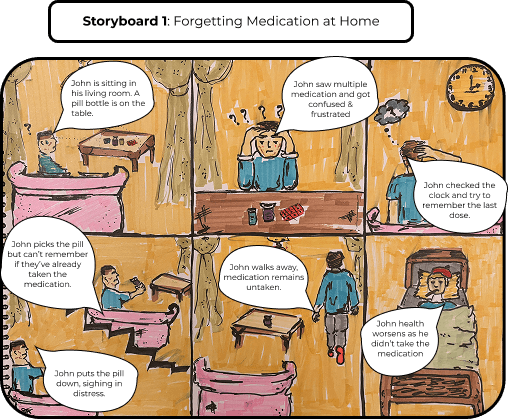
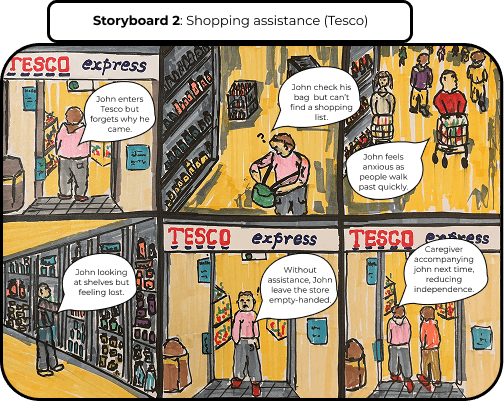
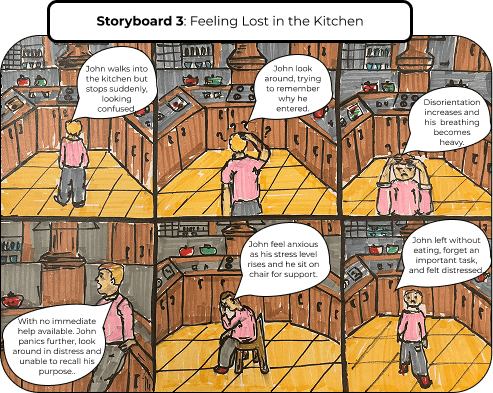
STORYBOARD
Prototype Walkthrough
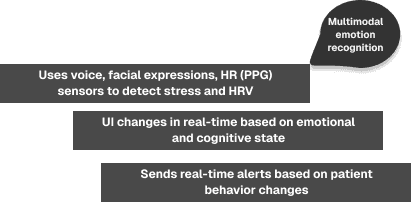
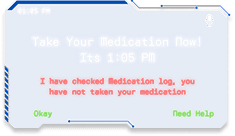
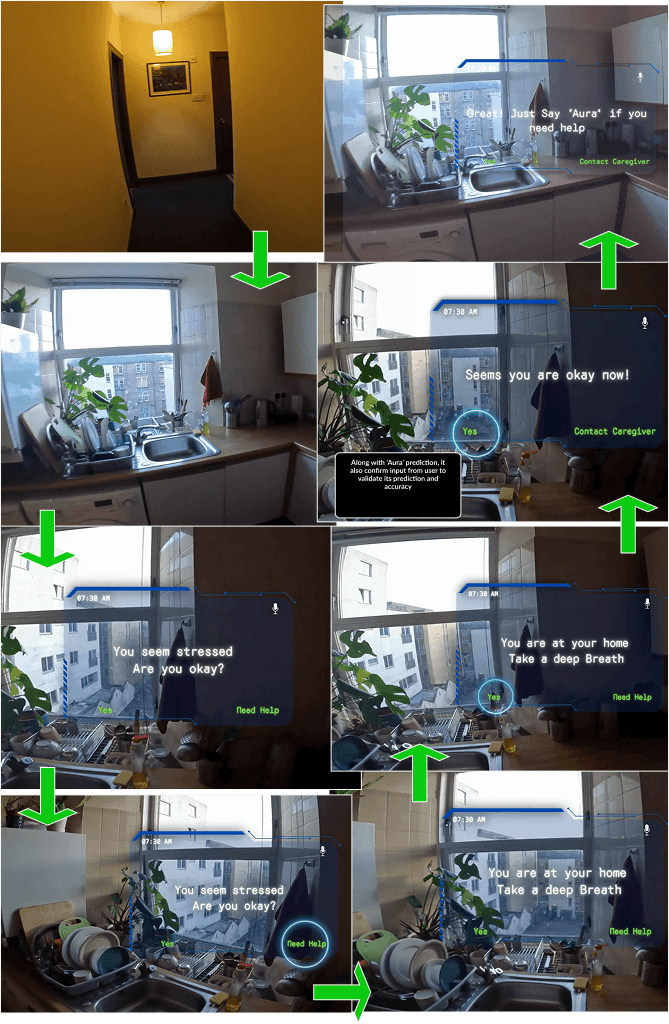
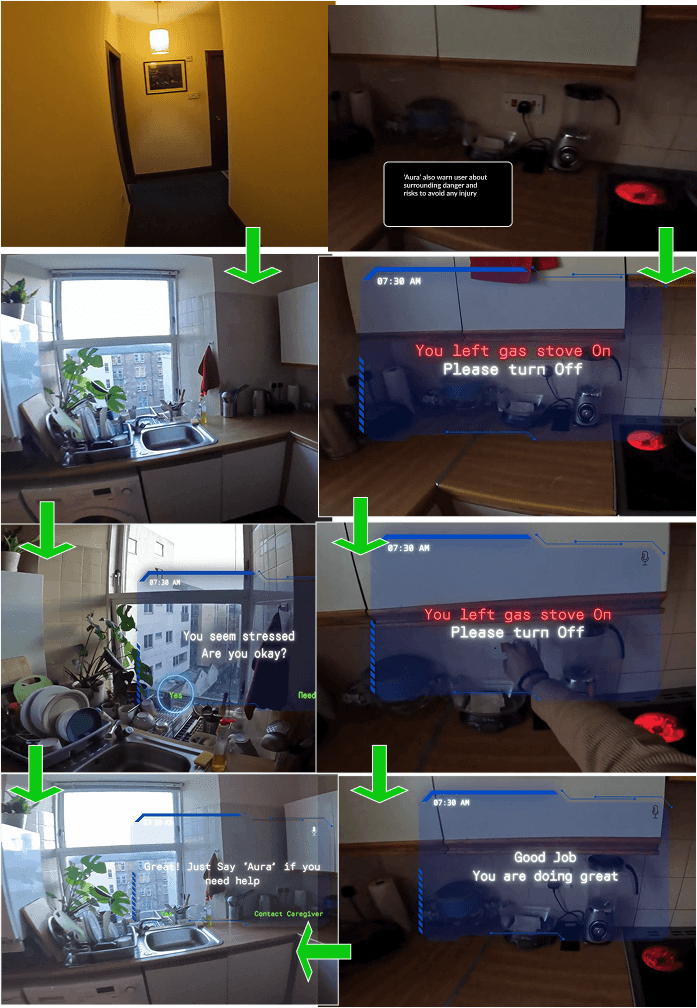
As the user experiences confusion or emotional stress, the smart glasses detect subtle cues through facial expressions, voice tone, breathing patterns, and physiological signals (e.g., HRV via PPG sensors). The AI assistant integrated in smart glass ‘Aura’ offers calming prompts and context-based support, such as reminding the purpose of a task or providing a visual shopping list. This walkthrough helps demonstrate the potential of emotion-aware augmented reality (AR) to empower dementia patients, reduce stress, and ease caregiver burden by promoting more stress free daily living.

DEVELOP PHASE
Designing Calm Through Connection
With the emotional and behavioral insights from the Discover phase, I began shaping the Aura ecosystem — a gentle digital companion designed to guide, comfort, and connect. Rather than overwhelming users with complex functions, I focused on creating an experience that felt calm, intuitive, and human.
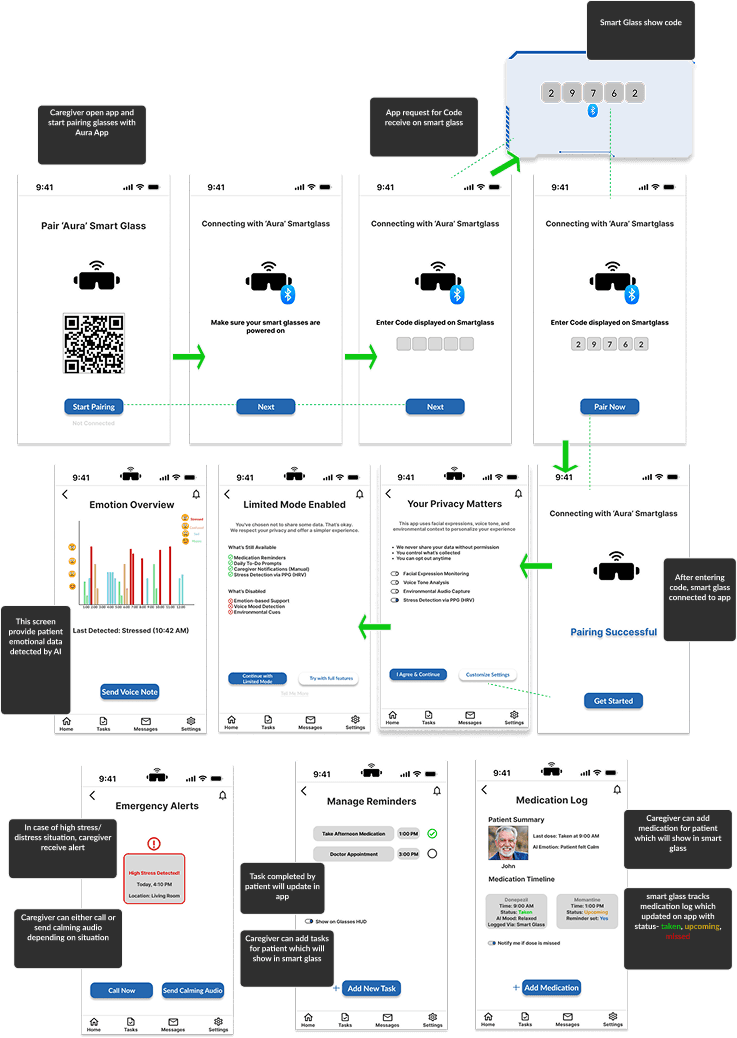
I started by designing a few key screens for the Aura caregiver app — focusing on pairing, emotion alerts, and daily reminders — along with a scenario storyboard illustrating how the system supports a person with dementia who forgets to take their medication.
The interface emphasizes:
Simplicity & Clarity: Clean typography, minimal color palette, and soft gradients that reflect calmness.
Empathy in Motion: Smooth transitions and non-intrusive alerts that inform without alarming.
Connection Across Roles: A unified language between caregiver and patient devices, reinforcing trust.
Through this phase, Aura evolved from a technical concept into a story of assisted independence — where AR glasses detect emotional or behavioral cues (like confusion or hesitation), and the caregiver app responds with timely guidance or reassurance.
AURA APP
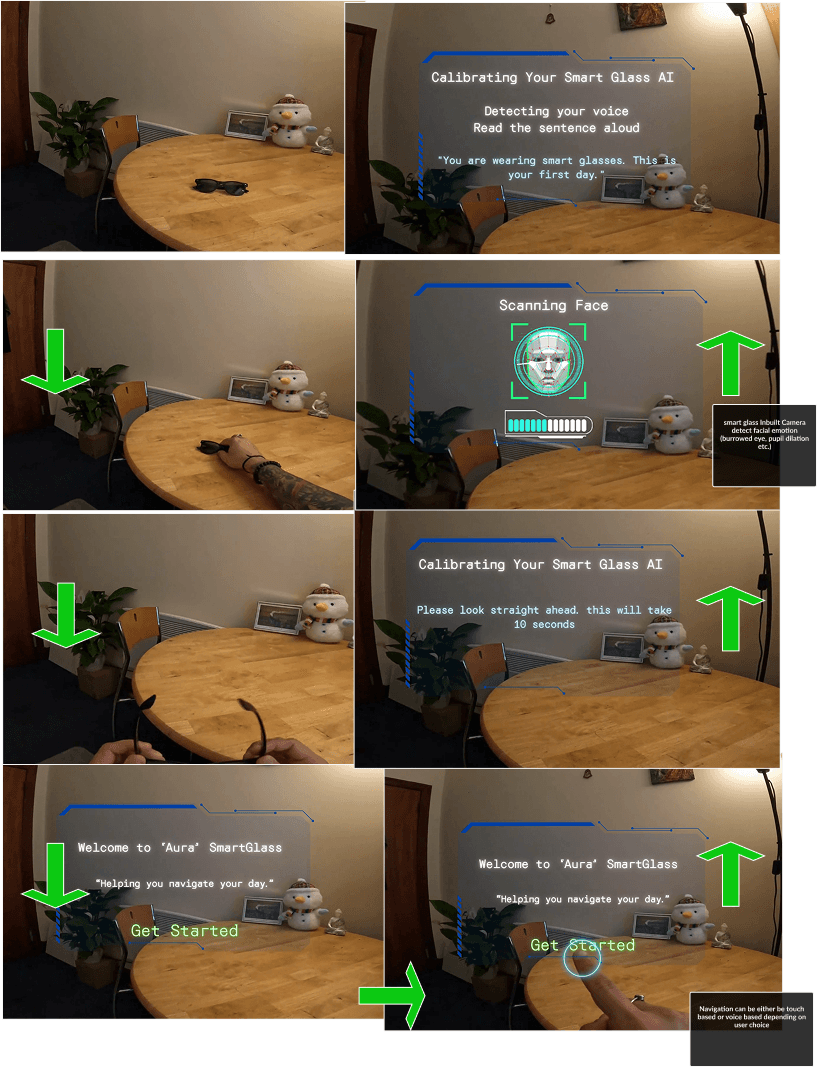
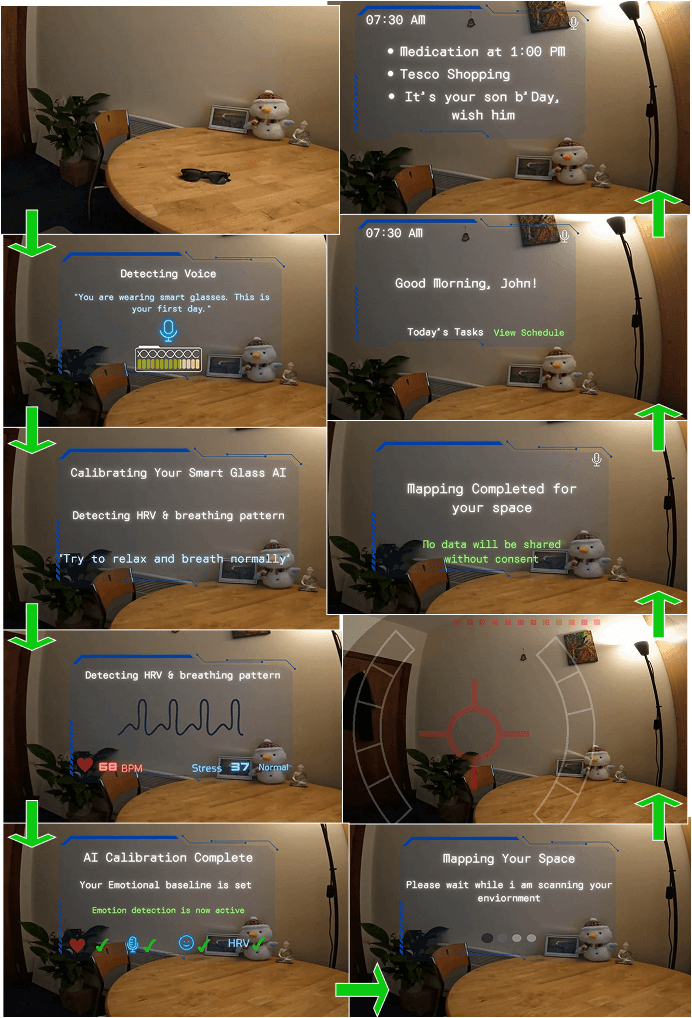
As the user experiences confusion or emotional stress, the smart glasses detect subtle cues through facial expressions, voice tone, breathing patterns, and physiological signals (e.g., HRV via PPG sensors). The AI assistant integrated in smart glass ‘Aura’ offers calming prompts and context-based support, such as reminding the purpose of a task or providing a visual shopping list. This walkthrough helps demonstrate the potential of emotion-aware augmented reality (AR) to empower dementia patients, reduce stress, and ease caregiver burden by promoting more stress free daily living.
Onboarding
John Feels lost in Kitchen
User consent is recorded in caregiver app as it not possible to include consent details in AR overlay because of limited size
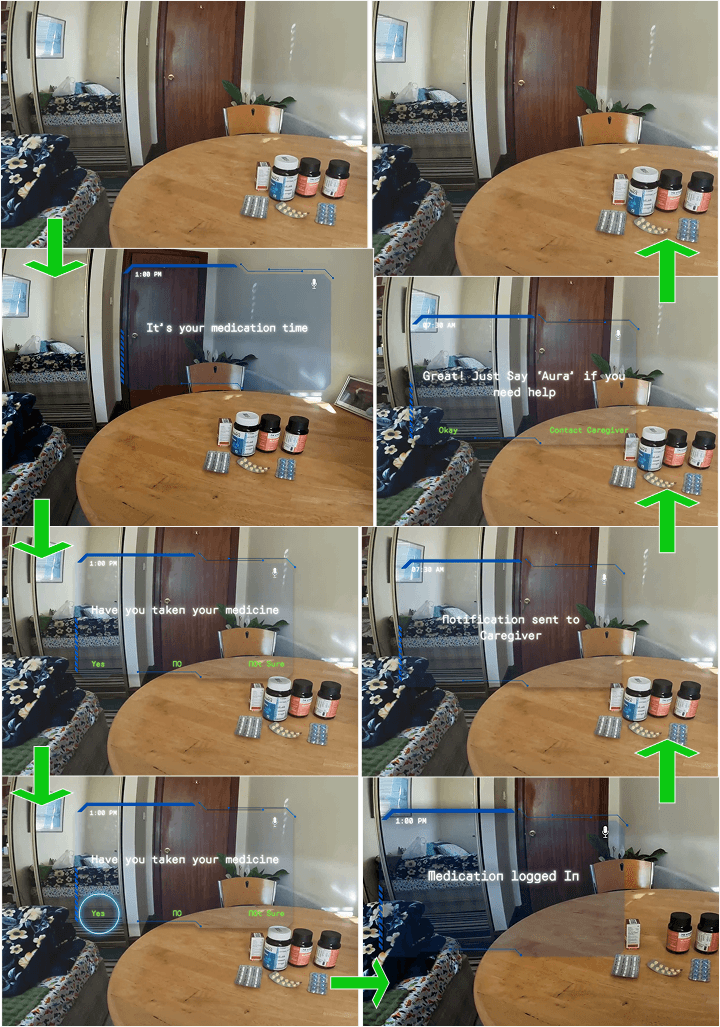
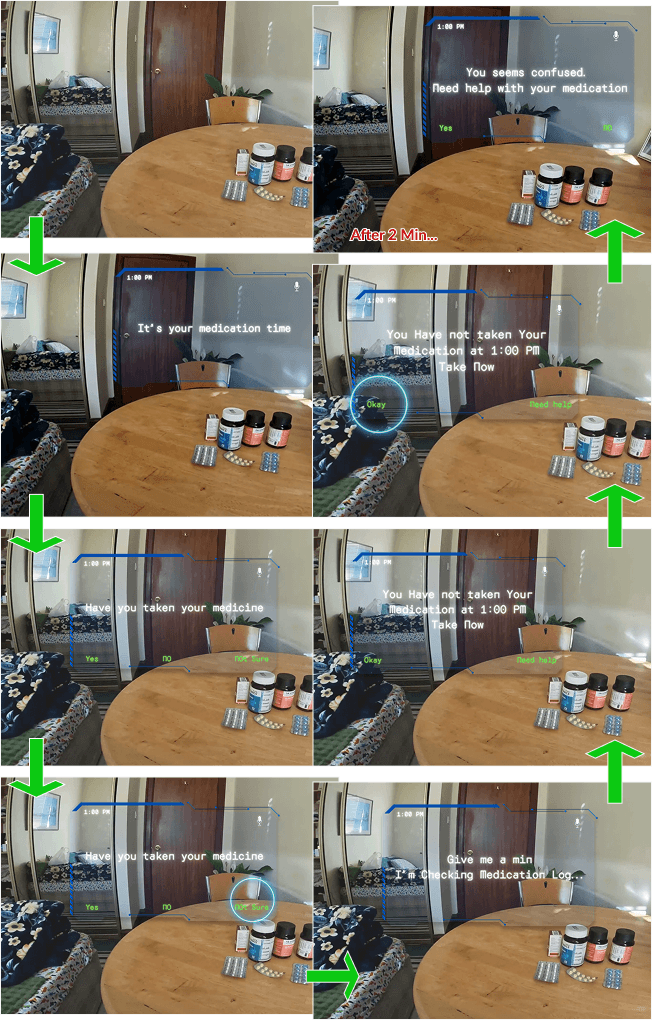
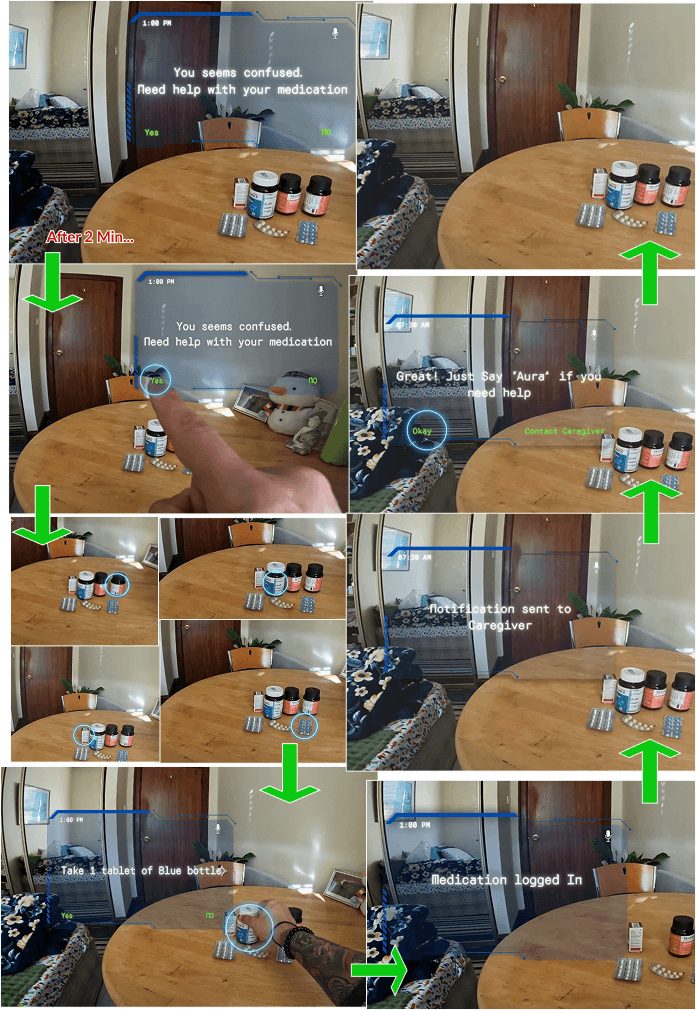
John feels confused and stressed while taking Medication
This scenario has three possible choices-if he took his medication- Yes, no and not sure. Below walkthrough show how smart glass respond when john select ‘Yes’
What If John select ‘No’
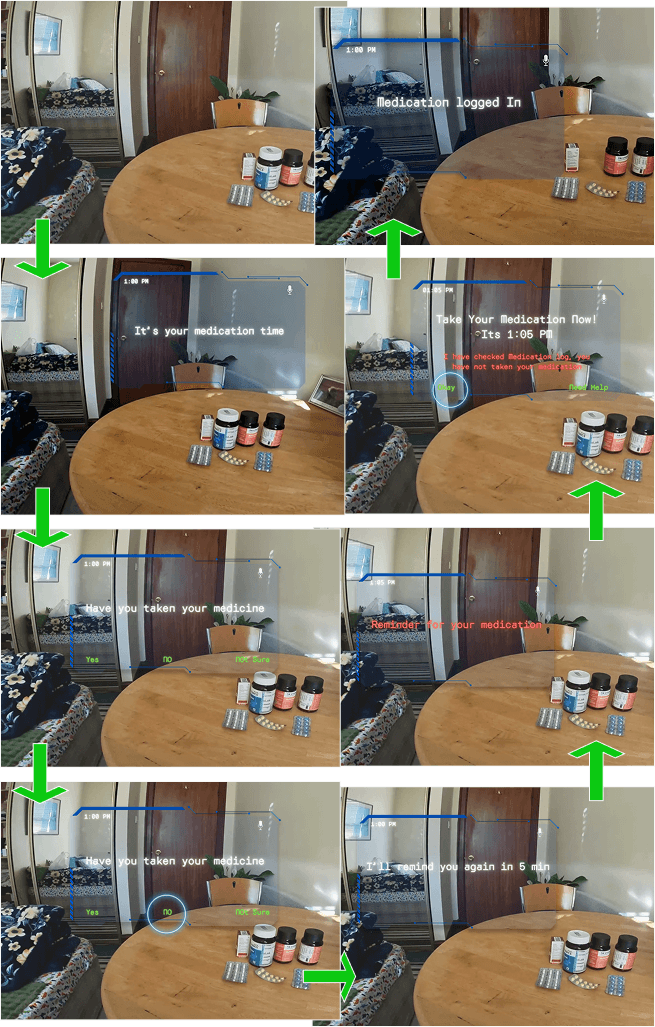
John pauses, unsure. He taps “Not Sure” — not because he doesn’t care, but because the memory feels just out of reach. For him, it’s a safe space between forgetting and remembering — a quiet signal that he needs maybe a little help
Where Design Whispers Comfort
A short concept demo visualizing how Aura supports caregivers and patients through calm, connected interactions
Learning & Reflection
Designing Empathy Into Everyday Care
Although Aura remains a conceptual exploration, it represents a meaningful step toward emotionally intelligent assistive design — one where technology quietly supports rather than supervises.
Through the process, I learned how designing for care requires sensitivity beyond interface logic — it demands an understanding of emotion, context, and human fragility. Translating behavioral insights into gentle, reassuring visual experiences became my biggest takeaway.
Working on Aura deepened my belief that technology can feel human when it’s designed with empathy. From the soft color palette to the non-intrusive interactions, every element aimed to express calm — reminding users that safety can also feel serene.
While the project was not tested with real patients, academic feedback highlighted Aura’s potential to bridge emotional gaps in dementia care — offering caregivers peace of mind and restoring dignity to those they support.